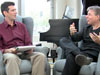
10 Minutes That Will Transform Your Piano PlayingYou need just 10 minutes a day to practice the piano effectively.In this video, Robert shares essential tips to help you get the most out of your daily piano practice. All in under 10 minutes. Released on February 4, 2026 DISCLAIMER: The views and the opinions expressed in this video are those of the author and do not necessarily reflect the views of Virtual Sheet Music and its employees. Video TranscriptionLike I said, I'm not a big believer in doing endless exercises, but this is one thing you absolutely need if you're going to take your piano playing to the next level. Welcome to Living Pianos. Robert Estrin here with 10 minutes that will transform your piano playing. Now you might have clicked on this just to think, oh, is this click bait? This is real. What I'm going to tell you today, if you embrace this, it will transform your playing that you can't even believe how much value you'll get out of it. Now what is this all about? How can 10 minutes possibly change your playing? It's a funny thing. There's a lot of piano teachers out there who make their students practice endless exercises and studies and technique. And I actually have a very different approach. I believe that the most important thing to work on the piano is repertoire, music. And there's so much great music at the piano that can solve technical problems that I say that most of that stuff is absolutely unnecessary. Here's the exception. And this is what's going to change your playing. If you embrace what I'm about to tell you, you've all seen this book, haven't you? Hannon, the Exercises for the Virtual Pianist. What is this all about? Now, I don't know how many of you out there could just sit down and whip off. You should be able to do that with all your scales and arpeggios. Maybe not that fast, but you need to have them under your control. And you might think what an arduous task it's going to take hours. And this is where the secret comes in. Just devoting 10 minutes a day. That's all you need. Tops. Five to 10 minutes, really. And you take one scale a week. Now, what do you do with it? And you think right now, don't click away from this video because what I'm going to tell you is really important. Like I said, I'm not a big believer in doing endless exercises, but this is one thing you absolutely need if you're going to take your piano playing to the next level. And here's how easy it is. You start with a C major scale. Now, you'll notice in Hannon, it's written in four octaves. Why in four octaves? See, you get comfortable playing across the entire keyboard. You can't just play in the middle and expect to be comfortable playing repertoire because piano music uses all the keys. You need to be comfortable in the different positions, knowing how to sit properly. You want to be seated where you are far enough away from the keyboard that you're not like this because then when you're trying to play the high notes, you're at the wrong angle here. As you can see, this doesn't work, does it? You can't bend that way. That's why you have to be far enough away that you can get the proper angle when you're going from high to low. Make sure you're centered and realize, by the way, the center of the piano is not middle C. If you start to play and go all the way, you realize that this is the center of the piano. So be sitting in the middle here by the name of your piano, undoubtedly. And then you use your metronome. Now here's the great thing. Every scale, you see all these fingerings and think, oh, am I going to learn all that? There's only eight fingerings you need for every scale. Going up, you have thumb crossings in the right hand on two different notes. You have thumb crossings in the left hand coming down on two different notes. And then you have a third and fourth finger crossing in the left hand going up and a third and fourth finger crossing in the right hand coming down. There's a total of eight fingerings. Yes, you have to learn those. But once you do, here's the really good news. Once you learn the C major scale, there are a whole slew of scales with exactly the same fingering pattern. That's why once you start this and it doesn't, I know I played that real fast scale just to show you the mastery that you can achieve by doing this. But really, it's the slow practice that's going to give you most of the value. You could start with the metronome at 60 and one note to the beat. So let's see what that sounds like. And the secret here to gain strength and independence of the fingers is the high raised fingers. I've got a lot of videos, by the way, on how to practice scales and arpeggios. I'm just going to give you the condensed version here so you can get right to it right after this video in your next practice session and start embarking upon something that is going to change your playing with just 10 minutes a day. And after a year, you'll know all your scales and arpeggios because there's 12 different keys. You've got your major scales, your minor scales, harmonic and melodic. You've got arpeggios major, arpeggios minor. That's five times 12 is 60, about a year doing one a week. And this slow practice is so great. It's like the stretching of an athlete or a dancer. It limbers everything up and gets the identification as to which keys are down and which keys are up. So you don't have sloppy technique, but there's clarity in which notes are delineated. As you play the scale, you keep your shoulders relaxed. You don't you avoid any up and down arm motion all with the fingers. Notice the right hand thumb stays tucked under. Under the right hand thumb every time the second finger plays. Boom. So it's ready. And coming down, it's the right, the left hand thumb that tucks under. Under. So you just need to learn the third three on E, four on B coming down in the right hand thumb on C and thumb on G in the left hand coming down. Those are those four fingers you have to memorize. This feels so good. You get a chance to really dig into the keys. And you go through in the left hand, by the way, going up three on A, four on D, thumb on C, thumb on F. So you just circle those fingerings in your Hannon book. And by the way, you can you can download this. And as a matter of fact, in the description of this video, you get a free copy of Hannon. It's readily available on the Internet. So you can print it out or just references it on your iPad the way I like to do most of my music. And you go through and that's slow practice. Like I just showed you, you go through four times that way and you get such a nice workout and you get the satisfaction of digging into the keys, having the fingers that are not playing up and out of the way, rounded fingers. So use all the joints. Then you do the same thing to the bead. All the way up and all the way down to that four times. Then finally, when you get to four notes to the beat, lighten up, stay close to the keys. And you can do this many times. Listening for the evenness. The evenness of the attacks and the space between the notes. That they don't overlap more on some notes than others. You just do that each day. You can do it as a warm up or you can do it when your brain is tired of learning music. You can go to something that's more of just pure technique. Just that five, ten minutes a day will transform your piano playing. Do exactly the same thing with arpeggios. Notice it's all coming from my fingers, not the arms. This wouldn't do you any good at all because you're trying to go fast like that. You can't go fast with your arms. So you just use your fingers. One note to the beat, two notes to the beat, four notes to the beat. Pick a scale or an arpeggio and do this on a regular basis. And you will not believe what it will do for you. Because what is 90 % of music is just scales and arpeggios, broken chords. It not only gives you technique, but it also gives you a depth of understanding of the key you're in. And the harmonic relationships, it's all encompassing for theory, for technique. And it just takes ten minutes and you can transform your playing. I'm Robert Estrin. Any questions, put them here in the comments at livingpianos.com or on YouTube. And we'll see you next time. Thanks for joining me. Find the original source of this video at this link: https://livingpianos.com/10-minutes-that-will-transform-your-piano-playing/ Automatic video-to-text transcription by DaDaScribe.com Comments, Questions, Requests: Tom Moylan * VSM MEMBER * on February 4, 2026 @10:47 am PST
Great tips for scales & arp.
Please consider doing a tutorial on Mozart’s Piano Concerto 21 in F. |
What next?
• Be notified of new videos• Browse piano sheet music repertoire • Visit Robert Estrin's website • Contact Robert Estrin via e-mail • Contact Robert Estrin at (949) 244-3729 • Become a Member!
|
||||||||||




We are certified by






Stay Updated & Receive the free "Music Principles" ebook!