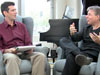
How to Play Clementi’s Sonatina Op. 36 No. 1 in C Major (3rd Movement)How to learn the third movement of Clementi's famous sonatina opus 36 number 1 in C major.In this video, Robert gives you a lesson on the third movement of the popular Clementi's Sonatina No. 1, "Vivace." Released on September 24, 2025 DISCLAIMER: The views and the opinions expressed in this video are those of the author and do not necessarily reflect the views of Virtual Sheet Music and its employees. Video TranscriptionHi, I'm Robert Estrin, LivingPianos.com. This is the last of a multi-part series covering how to play Clementi's Sonatina in C major Opus 36, number one, the famous one. And we also went through the second movement. Today we're going to delve into the third movement. Incidentally, there's a complete performance of the whole Sonatina for you. Check out the description to get all of this for yourself. So let's talk about this third movement. It's in 3 eighth time, and really you want to get up to a tempo where you're thinking the one as the beat, because if you're thinking the three, it's going to sound like this. I also was purposely not playing with articulations of staccatos. I wasn't doing much of the way of dynamic contrast. These are the things that brings this piece to life. You must be fanatical about all the details. And as I mentioned earlier, this is an Urtext edition, and Clementi did not write in any phrasing. It wasn't the custom at that time to necessarily write all the details of the score, but you must flesh out what makes sense in this piece, because just because these aren't written in doesn't mean that it should be devoid of these expressive nuances. So here's the way it really sounds great. And practicing slowly in this manner is what's going to get you there. That's slow, deliberate playing. Notice the dynamic contrast, yet I did almost all of it just with the melody, with the right hand. You don't really need to show so much dynamic contrast with the left hand, because otherwise it can overpower the melody. Listen to it if I play the piano section equal in volume both hands, and then I play forte equal in volume in both hands. It sounds so much better if you use the dynamics mostly in the right hand. Now I talked about in the first movement, so many of the techniques I talked about in the first movement video are relevant here, which is using the wrist for staccatos, like just where I ended up in the left hand to have. Because if you use the arm, you're going to get this sound. And then once again I'm going to show you on the side. It's heavy, it's ponderous, compared to the crisp staccatos you can get with the wrist as follows. So that is the touch you want to use. You want to use the wrist, not the arm, because the wrists are faster, lighter, and you'll get a much bouncier sound that's going to be much much more stylistically appropriate. It also enables you to gain more speed, because the wrists are way faster than the arm. The arm. Use the wrist for all the staccatos. Make the piano as quiet as you can. When you're playing forte, utilize more dynamics in the right hand and just a little bit in the left hand. And once again there's a lot of repetitions in this movement, and everything I showed you in the first movement is relevant here. These techniques once again transcend not just this sonatina, not just other sonatinas, but so much classical music in general. I'm just trying to think, for example, let's say of course if that same thing I were to use the arm, it would be like this. What a difference it makes using the wrist. Or the last movement of the famous, this is the Mozart K545 sonatina, sonata of Mozart in C major. Imagine playing that with the arm. Once again I'm going to show you from the side using the arm. It's funny, it's so foreign to be playing that way I can't even play accurately when I'm doing it. I'm not purposely trying to mess up, honestly, but listen to the crispness that the wrists afford you in classical era music particularly. So these techniques you're learning here transcend a vast array of literature, particularly in the classical era. And go ahead and listen to the complete performance, it's in the description. Any questions? Leave the comments here at LivingPianos.com. We are your online piano resource. Thanks everybody for joining me. Find the original source of this video at this link: https://livingpianos.com/mastering-phrasing-on-the-piano-clementi-sonatina-in-c-op-36-no-1-3rd-movt/ Automatic video-to-text transcription by DaDaScribe.com |
What next?
• Be notified of new videos• Browse piano sheet music repertoire • Visit Robert Estrin's website • Contact Robert Estrin via e-mail • Contact Robert Estrin at (949) 244-3729 • Become a Member!
|
||||||||||



We are certified by






Stay Updated & Receive the free "Music Principles" ebook!