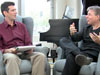
How to Learn Mozart’s Famous C Major Sonata: A Step-by-Step GuideHow to approach the most famous piano sonata by MozartIn this video, Robert teaches how to approach Mozart's piano sonata in C major K545. Released on February 11, 2026 DISCLAIMER: The views and the opinions expressed in this video are those of the author and do not necessarily reflect the views of Virtual Sheet Music and its employees. Video TranscriptionHi, I'm Robert Estrin, you've heard that theme before. I'm not talking about the Living Pianos theme, I'm talking about the Mozart. How many of you have played that famous C major sonata of Mozart or always wanted to play it? If that sounds like you, you're in the right place. We're going to go through a complete deep dive into how to play this ubiquitous sonata of Mozart. So, we're going to start off at the very beginning and work section by section and by the end of this video series, you will be able to master this wonderful sonata. So, sit back and have your score ready and it's in the description, you can follow along with the music and I'm here to guide every step of the way. So, we're going to start from the very beginning and the very opening section of this starts off beautifully and I'm going to explain the sonata allegro form as we go so you can grasp the theory behind it and most importantly how to actually execute it cleanly and get that sparkle that you've always wanted to get with this piece. And that's where it goes into the second subject. That was what's called the first subject in C major and let's break this down a little bit. Sonata Allegro form starts with an exposition exposing the themes and you just heard the first theme, the next section is the second subject. We're just going to focus on this much. First of all, how do you learn a thing like this? What I always recommend is read through the whole movement a couple of times just to get acquainted to see what it's about. Then get right down to work very small sections at a time. So what you can do is you can learn four measures at a time, you know you can even learn two measures at a time. The thinking is, oh my gosh am I going to learn two measures at a time? It's going to take forever to learn it and it's exactly the opposite. Listen to these words of wisdom. The smaller the section you take at a time, the longer productive practice session you can sustain because you don't get overwhelmed with too much music. You can really digest the score. You can take as little as two measures at a time and really be able to master this thing. So at the very beginning you just take the right hand and be sure to follow all of the markings in the score. That includes the notes, the rhythm, the fingering, the phrasing and the expression. Now this is an Ertext edition if you're following along with what I've got here. As a result it's only what Mozart wrote. There's no fingering so you might want to reference another edition that's fingered which you can find on Virtual Sheet Music or IMSLP or you might just buy the sheet music. It's not bad to have Mozart sonatas at the ready as I do. Nice Henley Ertext edition. So go through and just learn the right hand and just the very very first two measures. How long will this take you? Probably won't take you very long. What I would recommend is play it several times until you've got it committed to memory. Check back and forth with the score. Since it's a very small amount of music it's not going to take you but a few minutes to get that learned. And speed it up. Get it so it's just easy. It's not that much to begin with. Now here's where it gets interesting. The next thing to do is to learn the left hand and here because you've got broken chords just learn the chords first. You'll understand the underlying harmonies and better than that you're going to have good fingering. So you get that memorized first. That's those three chords. There's actually two chords because it's the first chord, the C major chord, then the G dominant 7 in the 4 -3 inversion. Don't worry about all that theory stuff right now. Just intuitively understand the chords by playing the broken chords in chords. Get that memorized solidly then break it up and play it as it's written. Now you notice I'm doing something a little bit interesting here. It's just not essential but it is a beautiful sound you can create. Later you might want to use pedal. Even though Mozart's piano didn't have a pedal it did have a lever that could be operated with the knee to do the same thing as a sustained pedal. So pedal wasn't widely used during Mozart's time because there wasn't a pedal and operating that with the knee people didn't generally use it. It's not as easy and intuitive as using your foot on the pedal. So as a result if you pedal too much the melody, thinking it blurred in the melody, so instead of pedaling you can actually, what I sometimes call phantom pedal, hold the first note of each chord. Take a look closely at that. It gets a really pretty sound that way. Instead. It's not essential, it's just a little tip of something I think sounds really lovely. After you have the left hand perfect, make sure you still have the right hand. Check your work. Notice the second measure has a slur so you want to delineate that slur. You want to get all the details because you're not going to save yourself time by learning it wrong first. Even if it's just the phrasing or the dynamic that isn't what's written, later you'll have to undo that which is way harder. I've talked about this so much in the past for those followers and subscribers and I thank all you subscribers. By the way if you haven't subscribed yet this is a perfect time to do that. So why all this trouble in the hands separate? Because the hardest part in piano playing is putting the hands together. Once you have each hand solidly memorized, you can play them effortlessly up to tempo, go drastically slower and play hands together and try it from memory the very first time. And check your work. Make sure for example the quarter rest at the end of the second measure that the C in the right hand comes off exactly when that E plays. Be fastidious with the details because you will spend ten times longer implementing these corrections later for anything you didn't pay attention to initially. Words of wisdom. If you've ever learned something wrong you know how hard it is to eradicate it. So don't be in a rush to get it halfway there or even 95 % there because that 5 % will take you ten times longer than learning the whole thing to begin with. Get it right the first time by breaking it down this way. So you go through and you learn this whole exposition. Now what else do you have? You have a trill in the fourth measure and trills must be measured. And more than that you don't have to play a fancy trill. You know you'll hear some people. You know all kinds of things. The beautiful thing is trills don't have to be fancy. You just have to know how many notes you're playing. The simplest trill that's effective that you can always make it fancier later if you want to. But just learn a simple basic trill. I would just play sixteenth notes. So once again. That way it makes it easier. You don't have to struggle with you know wasting your time instead of learning the rest of the movement. You can always go back later and play a different ornamentation if you choose. Now in terms of the scale passages that follow it's the same thing as practicing scales and I've got lots of tutorials on that. You can look in the description for some of those which I highly recommend. You shouldn't just practice scale passages when they occur in your music. You're really missing out on developing a solid foundation that will help you in virtually all the music you play. But you can practice this just as you would a scale putting on the metronome at a slow tempo. Raised rounded fingers articulating the release of notes cleanly. Playing up the previously played notes so you don't get this. That is what you want to avoid. So instead you play it with raised rounded fingers articulating not just the attack but the release all from the raised rounded fingers and don't play out here where you can slip off the keys because then your thumb has nowhere to go. You want to be here not here and you don't want to be like this because some fingers are longer than others. Make them all the same length by rounding the fingers and then you can play so effortlessly here. So you can go through slowly like this and gradually increase the tempo but you can even start even slower than that if need be. The eighth note is ticking. I use the wrist for staccatos which is so important because if you use your arms for staccatos it sounds like a wet noodle and particularly when you go faster you want to articulate those. You also probably notice that I'm not following everything in the score or more accurately I'm adding some slurs and staccatos that aren't explicitly written. This is because although Mozart wrote very few dynamics and phrasing it doesn't mean that the score should be devoid of expression and phrasing. That's why you'll find myriad additions that have tons of crescendos, decrescendos, staccatos, slurs, all of that stuff and you can use that as a reference for ideas but ultimately this is the shell of the music unlike later composers like Chopin, even Schumann and Mendelssohn and Brahms where there's a lot of detail of expression and phrasing. Mozart wrote very very few but it doesn't mean that it's not to be played with logical phrasing and expression. So this takes us to the next section and I want to play that for you now. Alright then. You know I do a fancy trill there but you don't need a fancy trill. You could just do something very simple. Sixteenth notes really is all you need. You don't have to have a fancy trill. So what for example could you do? Sixteenth notes are fine. Now many of you would be tempted to play because it's easy to play sixteenth notes. It's easy mathematically to do two notes for each of the sixteenth notes in the left hand, thirty second notes in the right hand. But if you're playing at this tempo then it's just so many notes. So the logical trill if you're not playing sixteenth notes is a three against two which is hard if you haven't done three against two. Which is the trill that I'm doing. Don't worry about playing fast trills. Trills must be executed faithfully. Know how many notes you're playing. You could always speed up the trills later. And I could do an entire video on how to approach practicing three against two. And I do have some videos on that subject as well. So rather than get hung up with doing fancy ornamentation, play simple ornamentation, learn the movement. You could always add more complex ornamentation later if you want to. And guess what? It's not necessary. It's still beautiful. It's fine. Another example of this trill, you hear me play. And that's another fancy trill. Let's get rid of it. Let's just get the sonata learned so you don't have to go and spend so much time trying to get these fancy trills. Like I said, I could make a whole separate video for those of you who want to learn how to execute more advanced ornamentation. But it's not necessary. If it was necessary, Mozart would have written the notes specifically. But is giving you artistic license to play whatever ornamentation you want. So what I would play is... 16th notes. You notice I do play the second one a little bit quieter as an echo. Mozart didn't write it that way. It doesn't have to be played that way. It's just one idea. If you like it, do it. If you don't, don't do it. It works either way. I don't always do that that way, by the way. But it's a nice touch to give it some tonal color. So why is this called the second subject? What is happening here, starting with the... Well, sonata allegro form is actually a three -part form. An exposition, a development, and a recapitulation. The exposition always repeats. You'll notice that this whole first section repeats. That's the part we are in this recording, as a matter of fact. It goes right back to the beginning. So, this is all the first subject. It's in C major naturally, because the sonata is in C major. When you get to the second subject... Look what's happened here. We just clearly ended in G major. So we indeed are in G major. And take a look. All the F's are F sharp, which indicates that indeed you're in G major now. It's a contrasting theme in the dominant. The key C, D, E, F, G. Five notes above the tonic. This is what nearly all sonatas do. Some sonatas in the minor might go to the relative major, but generally it goes to the dominant. And then you end the whole section in G major, the dominant. Now, the first time we went back to the beginning. Now, why do all the Mozart sonatas, all the Beethoven sonatas, all the Haydn sonatas, the Schumann sonatas, the Brahms sonatas, on and on and on, all repeat the exposition. What's up with that? It's to cement the two themes. So when you get to the development of these themes, which follows the next section, you remember the theme so it has a meaning to you. Otherwise, the music would just go right over your head. If you don't even know the themes, why should you care how they're developed? Well, listen how they're developed. So now we're going from key to key. We started in G minor, now we're in D minor. And this is all derived from the material you had in the exposition. And it goes on and on with these scale passages, all based on the idea, but developed quite a bit further Modulations all over the place. And here's what's something interesting in this. Where have you heard that before? It's the opening theme, but instead of being in C major, it's an F major. What's up with that? This is one of the most fascinating things about this particular sonata. Sonata Allegro Form is an A, B, C form, or some people think of it as an A, B, A form. Because you have an exposition with two themes, one in the tonic, one in the dominant, and the whole thing repeats. And then you typically have a recapitulation, which starts just like the beginning, and you have the opening theme again, in the tonic key. And then when it goes to the second subject, it stays in the tonic key, instead of modulating to the dominant G major. Well, I was only going to say recapitulation. Later it does go into C major. But in this particular sonata, it never gives you the first theme in the recapitulation, but it gives it to you at the end of the development in the subdominant, in F major. It's not what you'd expect. It breaks the rules. The development keeps going. Now the left hand gets a workout. The same scale passages from the exposition. Just like the end of the first subject, but now, look what key we're in. So instead of being like you were the first time, G major. Now we're in C major. So this is what's so interesting. He doesn't give you the first theme in the recapitulation, but he gives it to you in the subdominant, the F major, the opening theme, at the end of the development section. Boom! What craziness. And this is something that you want to take to heart. The fact of the matter is, composers didn't have a handbook how to write a sonata and follow the rules. They wrote beautiful music. And we, as musicians, we study these scores and try to see the patterns. And overwhelmingly, the patterns are simply exposition. Theme one in the tonic key, the key of the piece. Theme two in the dominant. Notes five, the fifth note of the scale. Repeat the whole section. Development of the two themes. And then the recapitulation where both themes are in the tonic. But here you can hear a little bit of a difference. And it closes out almost exactly the same, just some minor differences, and it closes in C major, just like the end of the exposition, except now instead of being in G major, we're in C major. A little variation there. Delightful, huh? And that's how the movement ends. Now, notice there's a repeat, and you can take that repeat, if you like. The tradition these days is to take the first repeat of the exposition, even though almost all the Mozart pianos and I with a couple of exceptions repeats both for the exposition and the development and recapitulation. Very important to take that first repeat so the themes are cemented in the listener's head. Incidentally, all the ornamentation in the recapitulation can be exactly the same as they were in the exposition. So, for example, when you go you can do the same sixteenth note trill there, and instead, this is what I do, the fancier trill, but it's absolutely fine. Don't feel you have to play a lot of notes. That basically covers the first movement, and if you're interested in hearing it complete without, you know, breaking it apart like I did here, in the description is a complete performance of the whole sonata for you. And in the next part of the series I'm going to tackle that second movement, and by the way, the second movement is a gem. So beautiful. If you've ever wanted to play a gorgeous slow movement of Mozart and get the melody above the base, above the broken chords beneath, and get the musical line, the rise and the fall, and know how to control it, join in the next part of the series. I'm Robert Estrin, this is LivingPianos.com, your online piano resource. Thanks everybody for joining me. Subscribe so you don't miss any of these. We'll see you next time. Find the original source of this video at this link: https://livingpianos.com/how-to-learn-mozarts-famous-c-major-sonata-a-step-by-step-guide/ Automatic video-to-text transcription by DaDaScribe.com |
What next?
• Be notified of new videos• Browse piano sheet music repertoire • Visit Robert Estrin's website • Contact Robert Estrin via e-mail • Contact Robert Estrin at (949) 244-3729 • Become a Member!
|
||||||||||



We are certified by






Stay Updated & Receive the free "Music Principles" ebook!