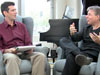
5 Secrets to Playing Chopin’s E-flat NocturneMaster Chopin's Nocturne in E flat Op. 9 No. 2In this video, Robert teaches you how to master the most famous Nocturne by Frederic Chopin. Released on December 10, 2025 DISCLAIMER: The views and the opinions expressed in this video are those of the author and do not necessarily reflect the views of Virtual Sheet Music and its employees. Video TranscriptionThis is LivingPianos.com, I'm Robert Estrin with how to play Chopin's most famous Nocturne with real expression. You know the famous E flat Nocturne. I don't know how many of you play this Nocturne, it's a gorgeous piece of music and I'm going to give you some pointers how you can get the most expressiveness out of this gorgeous work. Now the first thing that really is a tremendous challenge is the balance between the hands. You want to be able to get the melody above the accompaniment and the way to do that is to use the weight of the arm in the right hand while keeping the left hand very very close to the keys playing with a minimal amount of arm weight and that enables you to get this beautiful sound so you don't want this. So you might wonder how do you avoid that? Well believe it or not a lot of it even though it's piano, it's quiet, you need to project the melody. If you ever listen to a concert pianist up close playing a Nocturne you would be astounded how much energy they're putting into their melody. As long as it's done with an even weight of the arm transferring smoothly from key to key you don't get that harshness. Now without the arm weight you get ugly sound. But you can actually project a melody with a lot of intensity and still get a beautiful sweet lyrical quality and once again left hand staying very close to the keys. By staying close to the keys the more motion you use the more volume you get so if the left hand is playing it's going to be loud no matter what you do when you're using that much motion but if you just stay right on the surface of the keys. So when you're playing after the initial low note instead of just getting over this get over both chords that are following and you can practice this practicing in chords as follows. Get the idea? So you're practicing getting over both of the chords and that way when you're over them you can use a minimal amount of energy. By being over the chords and then once again not being afraid to project that melody. Remember the beautiful balance that is so important. Interestingly it's not just the balance of the vertical it's also the horizontal. You need the lines have shape with the rise in towards the middle of the phrase which is marked in most scores with the slurs. The higher notes generally are the peak the middle of the phrase the peak and the end is where if it was played on the wind instrument there would be the breath so you get this beautiful quality instead of this playing everything the same volume even with the good balance it would sound like this. But instead make a rise and a fall of each phrase give a natural breath and a flow of the music to the top of the phrase and back down again while maintaining the balance between the hands. So you've got the horizontal and the vertical happening what else is there? Well you notice I'm using the pedal and it's really an art of using the pedal to be able to get the bass line and the chords but not blurring different harmonies together so whatever harmonies change you must change the pedal and you want to capture those low bass notes so as you're playing the top notes it's almost as if this is happening. Almost like there's two different instruments playing and you can get that effect by capturing those bass notes on the pedal. And I've just got two more techniques to help you get the maximum expression out of this gorgeous nocturne and by the way all these techniques apply to almost all the nocturnes and many other works of Chopin and other composers so you can take these to heart. So you notice that there's a certain fluidity of the tempo a little bit of speeding up and slowing down this is called Robato and it's totally appropriate for romantic era music like this Chopin nocturne not so appropriate for early music of Bach, Haydn, Mozart, you know it doesn't really work there but in this if I were to do it devoid of any deviation of tempo and of course remember the secret to Robato is never gaining or losing time just riding a little bit before and after without it listen what it would sound like. You can see it needs a little bit of that time differential to it pulls you to the middle of the phrase like going over the crest of a hill in a car you get that ah feeling that's what Chopin does but much deeper level emotionally and see as you tap you'll notice that you can feel the pulse getting a little faster a little slower just like you naturally do in life and that's what gives the life to the music. I tried to use a lot of Robato just so you get the sense of it of course you want to be tasteful about this I was showing you a little bit exaggerated there just to get the feeling of how to do it remember if somebody can't tap their foot or their hand to the pulse when you're using Robato then you're doing too much you pull them along with you and if they can't feel the beat then they're not going to be as engaged in the performance. The last technique I want to talk about is the ornamentation there are trills there's little mordance and these must be measured even though they sound free you must practice them rhythmically and then there's a certain amount of freedom with the Robato but the ornamentation must be measured so right in the turn in the second measure you just play that as five equal notes and or it could be or that's the beautiful thing about ornamentation it's expressive liberty but I always recommend find the easiest way to accomplish the consistency in your performance if you're struggling with ornamentation and it's not reliable it doesn't have to be hard like if you find if you find that difficult play equal notes it's in a lot of ways it's more musical so there's a good argument to be made for this the same thing goes for the trill you know later on you got so right there just sounds like a whole bunch of notes make sure you know exactly how many notes you're playing and remember once again you don't have to play any particular number of notes just be sure you know how many notes you're playing and choose a trill that you can get faithfully and with great security and that will be ultimately what is expressive which is what ornamentation is all about anyway so I hope these these pointers are helpful for you these techniques how to control the balance between the hands and the arm weight in the right hand the left hand staying over the both notes of the chords with the fingers closed so it's very very quiet shaping the melody with a rise and a fall and the feeling of the breath between phrases capturing those base notes on the pedal so that you feel that it's almost like a trio of the melody a bass line and then the chords also a sense of freedom with the tempo with roboto but not so much that people can't tap with it never gaining or losing just riding around the beat and lastly you know the ornamentation doesn't have to be fancy it just has to be expressive and secure I hope these techniques are helpful for you to get your playing on the next level not only with the Chopin Nocturne but with other pieces of music you play if you like videos like this leave a thumbs up and comments here at LivingPianos.com and YouTube again Robert Estrin at LivingPianos.com your online piano resource see you next time. Find the original source of this video at this link: https://livingpianos.com/5-secrets-to-playing-chopins-e-flat-nocturne/ Automatic video-to-text transcription by DaDaScribe.com |
What next?
• Be notified of new videos• Browse piano sheet music repertoire • Visit Robert Estrin's website • Contact Robert Estrin via e-mail • Contact Robert Estrin at (949) 244-3729 • Become a Member!
|
||||||||||



We are certified by






Stay Updated & Receive the free "Music Principles" ebook!