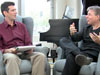
How to play Chopin's Military PolonaiseHelpful tips on how to approach the Military PolonaiseIn this video, concert pianist Robert Estrin gives you unique tips to approach and play the well known Chopin's Military Polonaise, and at the same time how to apply those very same tipes to other piano repertoire of your choice. Released on February 12, 2013 DISCLAIMER: The views and the opinions expressed in this video are those of the author and do not necessarily reflect the views of Virtual Sheet Music and its employees. Video TranscriptionWelcome to Virtual Sheet Music. I'm Robert Estrin and we have a question from a Virtual Sheet Music user KP asks some tips on how to play the military polonaise of Frederick Chopin. So I'm going to show you a bit about it. A lot of you probably know the military polonaise [plays piano]. That's the beginning part of it. Now, how is it possible to play that without getting exhausted? I remember when I first studied that piece I was a young teenager, and I got so tired playing through it, because you notice there are tons of repeats. If you play it with all the repeats it's a tour de force, because almost the whole thing is loud and it has a little trill section in the middle that repeats a couple of times where you get your wrists, so you have a little wrist, and so yes the wrists. The secret is in the wrists. So that's the lesson for today, I'm going to explain how to approach this. Now, you've got these rapid chords that require power and speed. Now, of course for ultimate speed you can't beat the fingers [plays piano]. The fingers go very, very fast on the piano, but they have very little power. Now the arms have immense amounts of power [plays piano]. So when you need tremendous power you use your arms, when you need speed use your fingers. It's music that requires a combination of both, like in the military polonaise, where you need to use your wrists and it's really important to identify that you're only using your wrists, because look what would happen if I tried to play the military polonaise with my arms [plays piano]. First of all, it's a hideously ugly sound because it's too much power, and the other thing it's impossible to get the snappy speed out of it. So, if I take the pedal off you can hear what I'm actually doing, and I'm going to do it slowly for you to show you the technique. It's important to make sure you're in the exact position over the keys, so that the wrist can do the smallest possible amount to achieve the results that are desired. If you're not precisely over the keys then the wrists can't possibly do their job. So, the arms do have a place in this. The arms have to guide the hands exactly over the right keys. Then the wrists just have to move less than an inch to be able to do their job. If they're moving much more than an inch, once again it's going to slow things down. So this is what it looks like slowed down for you [plays piano]. So you notice I'm using the wrist and sure it's not nearly as powerful as the arms, but it doesn't need to be because there's plenty of power in the wrist. Now, if you don't have any wrist technique how might you develop it? I suggest taking something very, very simple like thirds, the notes C and E with the second and fourth finger and put a metronome on 60 at one note to the beat and just play it eight times and go up the scale eight times on each note, metronome at 60, and it'll look like this, if you do it correctly [plays piano]. Now I could go up the whole scale like this, but you get the idea. I guarantee if you've never worked in your wrists before and you play all the way up the scale eight times on each note and down, you'll feel it in your arms because these are muscles that, if you haven't used the wrists before in your piano playing, they are new muscles to develop. So I suggest doing that exercise once each day and if you get too fatigued then stop in the middle and then do the other half later in the day and you will develop it. This slow practice enables you to make sure that you're only using the wrists. What you don't want to have happen is a combination of wrists and arms like this. The reason is that the arm motion will get in the way. Being able to play a technique slowed down feels unnatural at first, because obviously if the music was written that way you could accomplish it perfectly well with the arms. What you are doing is preparing your wrists for much faster music. You can practice octave technique exactly the same way [plays piano]. That's the secret of octave technique as well. And there are octaves later on in the military polonaise, as a matter of fact [plays piano]. So there we have some octaves for you and all of this can be accomplished easily if you have the wrist muscles and you know how to identify just the wrists, and the arms are used just as a guide. Thanks for joining me! Robert Estrin here at VirtualSheetMusic.com Automatic video-to-text transcription by DaDaScribe.com Comments, Questions, Requests: Paul on May 1, 2017 @6:35 am PST
Don't Play Piano With Just Your Fingers?
I've read many articles that say that you should not play the piano with "just your fingers" at any time. Supposedly, this produces a bad tone (?) and causes injuries. Your video on Brilliant Piano Finger Technique seems to disagree. Instead, according to these articles, you're supposed to always use "arm weight", gravity, weight transfer, wrist action, etc. Also, isn't bad tone a result of applying too much force on the key, not the specific means of applying it?  Robert Estrin - host, on May 1, 2017 @11:33 am PST
There are many different techniques employed on the piano depending upon the nature of the music. In a nutshell, the faster you play on the piano, the less arm weight you can support. Here are articles and videos that describe the relationship of mass versus speed on the piano:
FINGER TECHNIQUE http://livingpianos.com/how-to-play-piano/how-to-play-piano-finger-techniques/ IT’S ALL IN THE WRIST http://livingpianos.com/how-to-play-piano/how-to-play-piano-it%E2%80%99s-all-in-the-wrist/ ARMS EQUAL POWER AND DEPTH http://livingpianos.com/how-to-play-piano/how-to-play-piano-part-3-arms-equal-power-and-depth/ Paul on May 10, 2017 @11:29 am PST
Thanks for this information, Robert.
I'm also interested in your opinion as to whether it is impossible to produce a good tone at slower speeds with just the fingers, as some teachers are claiming. And if so, why? Paul on May 15, 2017 @9:32 am PST
Thanks for the information Robert.
Regarding the tone issue, is it impossible to produce good tone without weight, as some claim? christopher Slevin * VSM MEMBER * on May 1, 2013 @1:19 pm PST
I have no formal training and want to ask you about arm positioning. In Zez Confrey's Dizzy Fingers on the descending arpeggio, my right elbow swings out in order to hit the F sharp with my fourth finger. Is this correct or should I try to keep my arm in the normal position?
Robert - host, on May 1, 2013 @6:31 pm PST
Christopher- You should avoid any jerky motion. If you reach with your fingers, you should be able to accomplish the arpeggio with a fluid motion. Try practicing slowly and very connected until smooth. Then increase the speed little by little. (The metronome is an indispensable tool for that.)
Display more comments... (18 more)
|
What next?
• Be notified of new videos• Browse piano sheet music repertoire • Visit Robert Estrin's website • Contact Robert Estrin via e-mail • Contact Robert Estrin at (949) 244-3729 • Become a Member!  
|
||||||||||




We are certified by






Stay Updated & Receive the free "Music Principles" ebook!