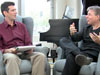
Why the Moonlight Sonata Makes People CryHow to master Beethoven's famous sonataIn this video, Robert gives you tips to master Beethoven's famous sonata so that your audience will literally cry. Released on December 3, 2025 DISCLAIMER: The views and the opinions expressed in this video are those of the author and do not necessarily reflect the views of Virtual Sheet Music and its employees. Video TranscriptionHi, I'm Robert Estrin and welcome to LivingPianos.com. Today I'm going to give you five techniques for playing the Moonlight Sonata. And I'm not talking about the furious last movement. No, we're talking about the beautiful, subtle first movement. There's a lot to this movement, much more than you think. A lot of people think, oh well that's easy, I can play the Moonlight Sonata. Boy, this is anything but easy to play this movement well. And I'm going to give you by the end of this video, you're going to have to handle them, how to approach really bringing this first movement of the Moonlight Sonata to a really high level. The first thing is just to learn the piece, learn this movement adequately or securely I should say. Practice in chords first so you really solidify. Starting in the middle here, you'll see it's just a bunch of broken chords. So that's one thing. But of course the biggest challenge of this movement is being able to project that melody on top with your weak pinky finger while not letting the triplet eighths dominate the sound. You don't want to hear this. It just loses everything. So how do you get the balance? A fantastic way to practice this, as I've shown before for those of you who have been following my channel for a while, is to practice with different articulations within the same hand. Now this is very difficult to do at first, but it is well worth the effort if you already have a good command of the music. Now if you're just learning the piece and you haven't really gotten it even where you can play through it adequately, don't try this technique yet. Wait until you have a good solid performance, then this is the way to take it to the next level by playing the triplets with a gentle finger staccato so your hand learns by articulations which notes to bring out and watch as follows. You get the idea? The reason why this is so effective is because number one, you can quantify short and long, triplets short, top line long, much more than loud and soft which is a little bit more relative rather than absolute. Secondly, you learn the feeling of those triplets relative to the secure arm weight of the triplet that goes only in the top of your hand, leaning that way and just playing lightly with these fingers. It's amazing how you'll be able to then be able to get... So this is a great technique and worth your time once you have a command of the music. Now another thing is so many people will play this movement too slowly and they'll get a sound like this. And you might think, well this is a dodgyo, so one, two, three, four, sounds like a dodgyo, a slow tempo, but notice it's written alabreve, cut time. This movement is written in two two, not four four, which means the pulse is the half note. This is a good slow pulse, isn't it? But if it's to the half note, then it's this. So by thinking the half note as the pulse, it makes it so much more relaxed and it doesn't bog down getting too slow. Now other things, I said there were five tips and we're almost there. The dotted rhythm is something you have to realize is not what you think it is. Because you have triplets and you might think that the sixteenth notes become between the last triplet and the next beat. So it would be like this. But that's not what the rhythm is, because a dotted rhythm is based upon four subdivisions of the beat, three plus one. Four e and a one, four e and a one. So the sixteenth note is longer, it comes in sooner than you think and is longer. So you get this sound. Instead of this, you get... That's the way it goes. With that rhythm, and it gives it a serenity and a fullness and a relaxed quality, doesn't it? Instead of... That's the rhythm. And isn't it more relaxing and dreamy, which is what you're after? I promised five tips and here's the last one. And this is a trademark of Beethoven. The idea of crescendo to subito piano. What does that mean? Suddenly soft. And it's a trademark you must take seriously. Don't think this is an oversight by Beethoven. He really meant it. So later on in this same section, you have a crescendo. Do you see how effective that is? Listen to how if you don't do that, what you lose. Or if you just didn't make your crescendo. But it's so much more effective with that subito piano. So once again, to learn the piece and understand its harmonies, practice in chords first. In order to gain the melody against the accompaniment, practice in different articulations. Remember, the pulse, it's in two-two time, not four-four time. Make the pulse the half note, not the quarter note. It will be faster, but it will feel slower because the pulse is slower than every quarter note, which is not what Beethoven intended. Look at the time signature, you'll see that for yourself. Remember the dotted rhythm. Don't make those sixteenth notes too fast. They don't come halfway between the three triplets. It comes in a bit sooner than that, making those notes longer, giving it a much fuller, relaxed sound. And lastly, give the fire of Beethoven. Don't be afraid of making crescendo to a subito piano. never knowing what to expect. I hope these five tips help you in your performance of the Moonlight Sonata. If you've got any other tips, leave them here at LivingPianos.com. We are your online piano resource. Again, I'm Robert Estrin and thanks for joining me. Find the original source of this video at this link: https://livingpianos.com/why-the-moonlight-sonata-makes-people-cry/ Automatic video-to-text transcription by DaDaScribe.com Comments, Questions, Requests: Ioannis Raftopoulos * VSM MEMBER * on December 28, 2025 @2:56 am PST
Hi Robert!
thank you for a very illlustrative and usefull tatorial on "moonlight sonata"! I have a question: I see sometimes at the begining on top of everything a sign "quarter note equals a half note!" which of course is wrong mathematically.What thiw strange sign means? is it just a typing mistake? thank you! Janet Dorning * VSM MEMBER * on December 3, 2025 @6:50 am PST
Thank you! Wonderful tips that inspire me.
|
What next?
• Be notified of new videos• Browse piano sheet music repertoire • Visit Robert Estrin's website • Contact Robert Estrin via e-mail • Contact Robert Estrin at (949) 244-3729 • Become a Member!
|
||||||||||




We are certified by






Stay Updated & Receive the free "Music Principles" ebook!