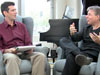
The Ultimate Guide to Transform Your Piano Playing in 2026An extensive lesson for all pianists and piano learnersIn this video, Robert gives you a guide to improve your piano playing in 2026. Are you up to the challenge? Released on January 21, 2026 DISCLAIMER: The views and the opinions expressed in this video are those of the author and do not necessarily reflect the views of Virtual Sheet Music and its employees. Video TranscriptionAnywhere you are, you can be practicing because practicing is a thought process. So if you're waiting in line somewhere, instead of just sitting there, you know, going on your phone and saying, did anybody text me or email me? Try playing through your music mentally. It's a tremendously valuable practice. Five essentials of piano practice. Memorize, memorize, memorize. That is the most important thing for certainly classical pianists to embark upon. Anybody who is a soloist is going to spend a great deal of their practice time memorizing music. And no matter how much music you've amassed, it's endless the repertoire available to you. And you really should spend time every day memorizing, always growing your repertoire. My father in his 80s was learning pieces he had never learned before, like major works, pictures at an exhibition on Masurcki. He learned for the first time when he was in his 80s and performed it. That takes real courage and it keeps your brain alive too. So memorize music and that is the foundation for piano practice. Well, what else is there? Well, you want to explore new repertoire and this is where sight reading comes in. You can see what music you like and start thinking about what you want to study next. At the same time, you enhance your sight reading skills. Of course, there's no substitute for playing with other musicians, which is the third thing. When you play with other musicians, first of all, when you play with musicians who are better than you, you learn so much. It's incredible experience. Even if they play different instruments from you, the sense of style and phrasing, rhythm, intonation, all these things come together and give you a depth of understanding you'd never get otherwise. Also, it enhances your sight reading ability because when you're trying to sight read by yourself, it's all but impossible not to stop when you mess up. But when you're playing with somebody else, you have to keep the music moving, which is really what sight reading is all about. So there's also other things that you can do to enhance your practicing. Exploring other styles, and this is where improvisation comes in. Not all music is written out. A lot of music, as a matter of fact, most styles of music from rock to pop to jazz, blues, new age, these are improvised styles primarily. Now, many of these works might have a lead sheet where you have a melody and chords to realize, but it's still improvisation. And it's richly rewarding to explore other styles of music. Not only that, but it's great fun. If you get into informal get togethers, parties, and people start playing the blues, if you've ever played the blues, you know you can play with anyone. In fact, it's a universal language. You can go to Bangkok, Thailand, and go to the clubs and sit in with somebody if you know how to play the blues and could read changes from a lead sheet. And the last thing I'm going to mention today is realize that anywhere you are, you can be practicing because practicing is a thought process. So if you're waiting in line somewhere, you know at the coffee house for your fancy drink to be made, instead of just sitting there, you know, going on your phone and seeing that anybody text me or email me, try playing through your music mentally. It's a tremendously valuable practice. Playing away from the piano, or any instrument for that matter, is very challenging and it makes you think much, much more than when you play where you have the feel. The tactile memory is a thing all of its own. Have you ever been playing the piano and you realize, you know, you talk about zoning out, no you zone in, realize, oh I've been playing this piece, and you've been thinking about something totally different? Well, that's tactile memory at work. Your fingers remember what they've done before. It's not really a reliable type of memory. That's why when you practice without the aid of a piano, where it's just pure thought, the practicing is incredibly valuable. It cements the memory and if you come to a spot you can't pass, reference the score when you have the opportunity and strengthen your memory. How to memorize music, something that I learned from my very first lesson with my father Morton Estrin, such a great teacher I never realized how unusual it was that I could memorize music until much later in my life when I went to the Manhattan School of Music and discovered that other accomplished pianists had no idea how to memorize and I ended up teaching many of my fellow students what you're going to learn today. Well, before I get into it, I want to talk about why memorization is such intrinsic to the piano. If you think about almost any instrument, basic tone production on the piano is about as easy as any instrument can possibly be. Even a very young child can go to a piano and get a reasonably good sound the first time they try. Try that in an oboe or a flute, just getting a sound out is hard. It could take years to even get the right position on the violin. What makes the piano so challenging is the complexity of the music and yeah, it really helps to look at your hands and page turns are a problem and just being able to see all the notes is sometimes just impossible. So memorization is a fact of life for pianists, that is for classical pianists. So how to memorize music? Well, I'm going to tell you a little story. Just imagine there's a pile of bricks in your front yard and you need to move them to your backyard and it's on a tarp. So you could go there and tug on that tarp really hard and maybe you move it a couple of inches and you could do that a couple of times and you know what, before you know it your back is really sore and you'll probably quit because it's just too hard. Well, the secret would be to take maybe a brick in each hand, walk to the backyard with it and you know, go back to the front yard, take another couple of bricks, walk them to the back. It might take you several hours but before you know it, that pile of bricks that was in the front yard is going to be in the backyard. Well, that's the secret of memorizing music. You take a very small amount at a time and before you know it, you have more than a pile of bricks, boy, I could tell you that. So how do you do this? Well, it's really a five -step process. In a nutshell, you learn a very small section, right hand alone, then you memorize it. You do it in the left hand alone, memorize that, make sure they're thoroughly memorized before the third step, which is the hardest step, putting the hands together. Then you get that memorized, go on to the next section the same way, that's the fourth step and finally connect from the beginning. Voila, five steps. Now, I'm going to break it down a little further for you. There are, within those five steps, there are additional five steps. Now, no, don't, don't worry, it's not that complicated. When you're memorizing, there are not really steps but five facets you must take into account when you're learning. The notes, obviously, the rhythm, which you want to count out loud to be certain you're learning it correctly, the fingering, which is written in the score or if you're a more advanced student, figuring out an appropriate fingering for the passage, the phrasing, the ways in which notes are connected or detached, very important, and finally the expression, which is everything else, the dynamics and the words that are written to get slower, faster, anything like that. Now, I know sometimes people will say to me, well, I want to put the expression in later, I'll put the dynamics in later. Well, there's a fallacy to that thinking, which is you're going to be playing at some dynamic level. So, if you're playing the wrong dynamic level, later you're going to have to unlearn what you learned wrong. Now, this is why this method of practice is so incredibly efficient because if you've ever learned something wrong, you know how incredibly difficult it is to unlearn it. I had a teacher at the Manhattan School of Music, Constance Keene, who used to say, take a piece of paper and crease it and she put a piece of paper in my hand and I creased it and she said, now try to get the crease out and try as I might. It's impossible and so it is when you learn something wrong on the piano. It's darn near impossible to undo mistakes. The secret of this type of practice is that you never allow yourself to learn anything wrong because you keep it incredibly simple. For example, let's say you were learning the famous C major sonata of Mozart Cursor 545. Well, that is probably a sufficient amount to learn or even half that amount. So, let's say you were taking even half that amount. You could certainly learn, you might do it slower at first, but it shouldn't take you more than a minute to learn that. Am I right? Then, of course, you want to look at the notes, rhythm, fingering, phrasing, and expression. Watch your slurs, look at the dynamic, the tempo marking, all of that. Be certain it's right. Double, triple, quadruple check your work like a pilot in a plane. Even just came from the hangar and all the crew just checked everything out. He's still out there looking at the right rudder, left rudder, flaps. He's checking it again because in this case, lives are at stake. Well, your time is at stake in your practice and your time is valuable. So, you want to double and triple check your work to make sure that you're not going to have a mistake ingrained. So, you take that, you memorize it. The left hand, you can actually first learn it in chords, which I always recommend. That way you'll find a good fingering, plus you can understand the harmonies more easily. Then, memorize those chords first, then break it up as it's written. Get that memorized. It shouldn't take you more than a minute to do that. Then, put the hands together. This is the hardest part. This is why you want to spend the time hand separately, perfecting, making sure it's comfortable, up to tempo, and you can play it many times in a row accurately before you ever attempt to put the hands together. Here's what I'm going to ask of you. When you put the hands together, try to do it from memory the very first time. Very important. Go very slowly. That is the most important thing. It will make you think. You must think it through. Now, if you get to a point where you're stuck, of course refer to the score again. Go back and forth until you can play that phrase perfectly from memory. Once you've done that, you go on to the next small section. The size of the section depends upon the complexity of the piece, but the rule is every one of these steps should take you not much more than a minute. If it takes you much more than a minute, then you're taking too much at a time. Take a small enough section where it'll take you a minute or two to learn the right hand. You learn the notes, the rhythm, the fingering, the phrasing, the expression. Each of those takes probably less than a minute. Then, playing it a few times. By being thorough in that, you'll be able to get the hands together from memory. Finally, you get that. You learn the next section. Then, go back to the beginning and put them together. You may need to use the score to check your work and see how the phrases connect. Many times, it's good to go to one note beyond a phrase so the connection is kind of already there, like a jigsaw puzzle all pieced together. You'll be surprised at how quickly you can memorize a piece. If you just read through a piece over and over again, missing it again and again and again, hoping that eventually you're going to get it, there's a real fallacy to that. It's really anti -practicing because you've missed it so much. Now, you've learned, ingrained, how to play it wrong. This is why it's so necessary to break it down to its component parts so you can move that pile of bricks into your head and have a piece of music to show for it. Do performers play slower as they age? The answer to this question is surprising. Well, let's talk about this. Now, we can talk about pianists, violinists, and other instrumentalists. You might think that as performers age, they would naturally get slower. After all, particularly the technique that some young players have, you think they couldn't maintain it as they get in their 60s, 70s, some performers even in their 80s and 90s, but there's really more to it. You will find that very young performers, for example, prodigies oftentimes play very, very quickly and as they get into their 20s and 30s, as they mature, oftentimes they start taking more time with the music. Is this because their technique has diminished since they were children? Absolutely not. Sometimes you can actually say more by taking more time with it. It's very important to realize that to cherish and nurture and caress each note, it can be akin to making love. It does not have to be rushed and if you love your music, you want to craft it. Just like when talking with people, you don't want to talk so fast that it's hard to even digest what someone's saying. Now here's the key. The technical aspect is one thing, but the other aspect is very important to realize. If you have a piece of music you've practiced, you may have played it through tens of thousands of times and as a result, to you, it might seem slow because you can think it through so quickly, but somebody who has never heard that piece before, it could just go right over their head. So you want to take enough time for people to be able to digest the music and this is something that's learned, the maturity of playing longer. Now there are no hard and fast rules. There are some older players who play very fast and younger players who take their time. I've heard dramatically different tempos from usual out of older and younger players, but generally speaking, the difference oftentimes between very talented student performers and professionals is the tempo they take. Now on the flip side, many less seasoned artists tend to play slow movements too slowly and they can get bogged down because they're thinking the faster note value as the beat instead of the longer note value. Thinking each measure or each half measure instead of thinking every beat can give a much more relaxed feel to the music and create a different type of tempo at the same time. So there are no hard and fast rules, but I would say generally older players indeed tend to get slower, not because of technical restrictions most of the time, but because of a musical maturity. Thanks for the great questions. Again, Robert at livingpianos.com. See you next time. Find the original source of this video at this link: https://livingpianos.com/the-ultimate-guide-to-transform-your-piano-playing-in-2026/ Automatic video-to-text transcription by DaDaScribe.com |
What next?
• Be notified of new videos• Browse piano sheet music repertoire • Visit Robert Estrin's website • Contact Robert Estrin via e-mail • Contact Robert Estrin at (949) 244-3729 • Become a Member!
|
||||||||||




We are certified by






Stay Updated & Receive the free "Music Principles" ebook!