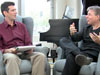
The Most Explosive Ending in Piano — Chopin Ballade No. 1 Coda (Part 3)Mastering Chopin’s Ballade No. 1 Coda: Precision, Control, and MusicalityIn this lesson, Robert Estrin breaks down the legendary coda of Chopin’s Ballade in G minor, offering practical strategies for mastering its technical and musical challenges. From slow practice and note grouping to wrist technique and score analysis, this video provides a clear roadmap for developing speed, control, and expressive depth in one of the most demanding passages in the piano repertoire. Released on April 15, 2026 DISCLAIMER: The views and the opinions expressed in this video are those of the author and do not necessarily reflect the views of Virtual Sheet Music and its employees. Video TranscriptionI’m Robert Estrin and this is LivingPianos.com with the third part, the final part of the Chopin Ballade in G minor, the coda, the mammoth coda, one of the great codas in the piano literature. For those of you not familiar with the Chopin G minor Ballade coda, I’m just going to play the coda for you first. What a piece of music, huh? So how to approach it? Well, first of all, one of the fundamental things about this coda, each section has its own methodology of how to practice it. So let’s start right in with the beginning of the coda and see how to approach learning this section. What makes the first part so tricky is the juxtaposition of the hands. So I would suggest first practice a great deal hands separately, paying very close attention to the phrasing. Very important, you have accents, you have staccatos, and for example, in the left hand, so few people do this. Notice if you look in the score how the single notes on the bottom are staccato, but the chords are not staccato. So many people don’t pay attention to that. I think it makes a big difference in the sound. And you know what? Generally speaking, when you’re talking about the great composers like Chopin, Beethoven, Mozart, Bach, Debussy, on and on, they didn’t haphazardly put in these markings. And incidentally, try to reference as close to an Urtext score as you can so you know what they wrote and not what some editor put in afterwards because they were very mindful. Every single thing in the score is important and molds your performance and affects your whole interpretation of the work. So then the right hand, notice the accents. The tricky part comes putting them together because it’s kind of a strange juxtaposition. Practicing very slowly is really helpful. Simply doing that with metronome speed should get you there. Now in terms of how to negotiate the rapid right hand, when you have the repeated chords, make sure you use your wrist staying close to the keys. You don’t want to use your arms for this, but the wrist. And you should be able to develop speed and fluency. Keep everything, this is counterintuitive, but keep everything light except for the accents and the sforzandi. And that is what enables speed. Listen to Vladimir Horowitz’s recording of this and you’ll be amazed at how light he plays it and almost playful in a way. It doesn’t have to be bombastic and heroic, it just needs to be energetic and fast. So then we have the next section which is basically you practice first in chords. And notice once again the double stem and the accent. And once again, you can practice little note groups which I’ve talked about before in the earlier part of this series. If you haven’t checked them out, go back for that and if you’re interested in the complete performance it’s also in the description. So when you do that, have the thumb over the A-flat here. You train your hand to get over all the next notes of each successive hand position in advance. You practice the speed and the relaxation. You should be able to end up here totally relaxed with your thumb naturally landing above the A-flat. So that’s wherever in this case is the G. So make sure you prepare in advance. See how I’m practicing to get my thumb over A-flat? You can practice small little snippets of the music up to tempo. So you work on two fronts. You work slowly gaining security and one notch at a time with the metronome but you also work in little tiny snippets up to tempo. Notice my second and fifth fingers are already over the rest of the chord. So I always like to go bounce back and forth between different practice techniques in order to gain security and find what works. To regress a bit, there are other practice techniques I haven’t even brought up. One thing is staccato fingers. It’s such a fantastic way to practice like this section. Because you gain the security of each note starting very slowly articulating each note. This is a universal practice technique. I wanted to bring up to you because I didn’t bring it up in the other sections of this. Staccato fingers, you really articulate the release of notes to get evenness and you get that jewel-like sound in your playing that is so enchanting. Alright, so what happens after this? Then we have the... And once again. Practicing in chords. You see what I’m doing is playing up the tempo but only small note groups. Then you can start to string some of the note groups together. So let’s say you have that. Then you... You see how I started with just smaller note groups, then I start stringing those note groups together. And then eventually you have all four of them. You see how you start with the simple. Then. Then. You get the idea? This is a universal principle of trying to get something up to tempo working on two fronts. One notch at a time method where it’s invaluable. And incidentally, even if you’re not doing metronome speeds, going back and just playing at a very relaxed tempo to solidify. Even if you don’t do all the metronome speeds between, just that slow practice is so incredibly important to reinforce your performance. In fact, maybe you have gotten this coda on a concert level and then it’s deteriorated. You wonder, how do you bring it back again? Boom. That’s it. Slow practice. Slow, deliberate, no pedal, metronome, looking at the score, always reinforcing the memory. Not just the notes and the rhythm and the fingering, but yes, the phrasing and the expression, every little nuance and touch in the score is so vitally important. You’ll find that once you learn those elements, the interpretation falls into place. You use the composer’s markings to mold the concept of the work. What an idea. That’s where it comes from. And those little details are what give you clues as to how to really play it. So then later on you have the same thing by the left hand. By the way, sometimes when you have music written where you have two obvious parts that are in the left hand, you can work on them in your initial memory, separate. And then you go... Get the idea? You go through and learn each part. It’s hard to do, actually. So, and then you put the two parts together. So it’s almost like... Get the idea? And then you put it together. And here again, you’re wondering how do you negotiate this? Just practice. Playing that octave with the wrist and end up right over the chord in a totally relaxed position. And then... Always being over the next chord. And incidentally, you need to really study the score in order to do this. Which is the whole point. You learn the score and you get it to a level of cognition that is beyond just the physicality of it. Because you know, as you well know, when you play a piece over and over your hand naturally kind of does it and you don’t even know what you’re doing. That’s dangerous. That’s why you want to reinforce with the score as I’m showing you here. And sometimes, taking these micro sections, it’s just like if you’ve ever said a word over and over and over again, again, again, again, again, again, and it doesn’t even sound like a word. And then you start to analyze how your tongue is moving and the lips and everything that’s creating the sound. Well, that’s exactly what you want to do with your music. So that you get to a point of this infinitesimal understanding of where the hands are, what the notes are, what the harmonies are. And you grasp, that’s why doing just the chords, you get the idea of the diminished chord going to the C minor 6. Once again, the D major chord. And you get the sense of the harmonies by not just the motion of the hands. Which, by the way, if we didn’t have that motor memory, good luck. Any pianist depends upon it. Of course, you depend upon it too much at your own peril. But if you didn’t have some of that, it would be impossible to be able to play hours of the piano from memory accurately. If you didn’t have some automatic response, just like, and I brought this up in previous videos, watch a toddler learning to walk. And of course, it’s an incredible intense concentration and we take walking for granted. And you can take a lot for granted on the piano. So what’s the next section we have? Then of course, you know, we have... And of course, once again, working chords first. So working there, and you kind of rotate the hand. Instead of just doing with the fingers like this, you rotate the hand left and right. And then it just, it pops. And the left hand, once again. Practicing getting over the chords and you can just do that. Always being over the next chord. Then you see what I’m doing? By practicing the preparation for the next chord or octave, you train your hand to land in the right place in a completely relaxed manner. So you can end up playing the coda relatively effortlessly, never struggling. Because you’ve practiced the relaxation, you’ve practiced getting there, instead of struggling and having to use additional energy, you practice getting there with absolutely no tightness in your hand whatsoever. And don’t be afraid to spend an inordinate amount of time just doing... and being limp, but touching the keys. It’s practice relaxation, folks. I’ve talked about this throughout this series. By the way, if you like this series, if you haven’t subscribed, this is a great time to do it. There’ll be others. But let me know in the comments if this is helpful for you and what other pieces you might like to see here on LivingPianos.com. So then you come to the scales. And notice that because there’s a crescendo, you start with the accent, but then lighten up. In fact, every place in this coda, take an opportunity to play as lightly as possible, except for accents, sforzandi, and crescendos. Everything else, you can just be delicate and it will work because it’s punctuated by the accents and the sforzandi and the crescendos. And when you get to the top of this passage, just like a great singer wouldn’t go... Make it melodic, even though it’s... Don’t just run over it. It’s not an exercise. So give it a little bit of time at the top. And of course, this is unmeasured and you can work once again in note groups. Get the idea? Little note groups. Basically, as I mentioned before, piano technique can be reduced down to a large extent to hand positions and finger patterns. And if you get your hand to do this effortlessly, then it’ll be so easy. Each hand position and finger pattern, you can practice independently, then string them together by landing either on the note of the next hand position or stop just before it. And that’s the way you approach this. Then you have these scales. Start them quietly so that if you start... You’ll never make it. Start delicately. And hold these long enough to bring out the top notes. And the same thing here. Start delicately. And once again, sustained and top notes. Now the octaves. I have a video on how to practice octaves. It’s all from the wrist. Because if you use your arms, it’s too slow and the fingers don’t have enough power. So it comes down to the wrist. And of course, using the fourth finger on black keys. And I say wrist, but it’s very, very, very minimal wrist motion because if your wrists go too high, now in slow practice, you can practice it. But when you’re getting faster, you’re staying right over the keys but it’s all from the wrist because the arms are not fast enough. And the fingers don’t have any power. It’s in the wrists. And the final two chords of this fantastic Ballade. Make sure that you’re dropping all the weight of the arms all at once from the surface of the keys because if you play from above, you’ll get this sound. It’s ugly, but you play from the surface of the keys and dropping all the way to the arms all at once. And you get a very rich sound and it will never be harsh. So that’s the lesson of the Chopin Ballade in G minor. How many of you would like more videos like this? Let me know in the comments here at LivingPianos.com and YouTube and you can subscribe on both to get lots of rich resources. Just hit a milestone of 125,000 subscribers here on YouTube and we’ve got thousands of subscribers on LivingPianos.com and almost 2,000 videos for you. So hit that like button if you like videos like this. Share it with your friends to keep piano alive. That’s the mission of Living Pianos. I’m Robert Estrin. Thanks everybody so much for joining me. It means the world to me that people like you will love the piano like I do. See you next time. Find the original source of this video at this link: https://livingpianos.com/the-most-explosive-ending-in-piano-chopin-ballade-no-1-coda-part-3/ Automatic video-to-text transcription by DaDaScribe.com |
What next?
• Be notified of new videos• Browse piano sheet music repertoire • Visit Robert Estrin's website • Contact Robert Estrin via e-mail • Contact Robert Estrin at (949) 244-3729 • Become a Member!
|
||||||||||




We are certified by






Stay Updated & Receive the free "Music Principles" ebook!